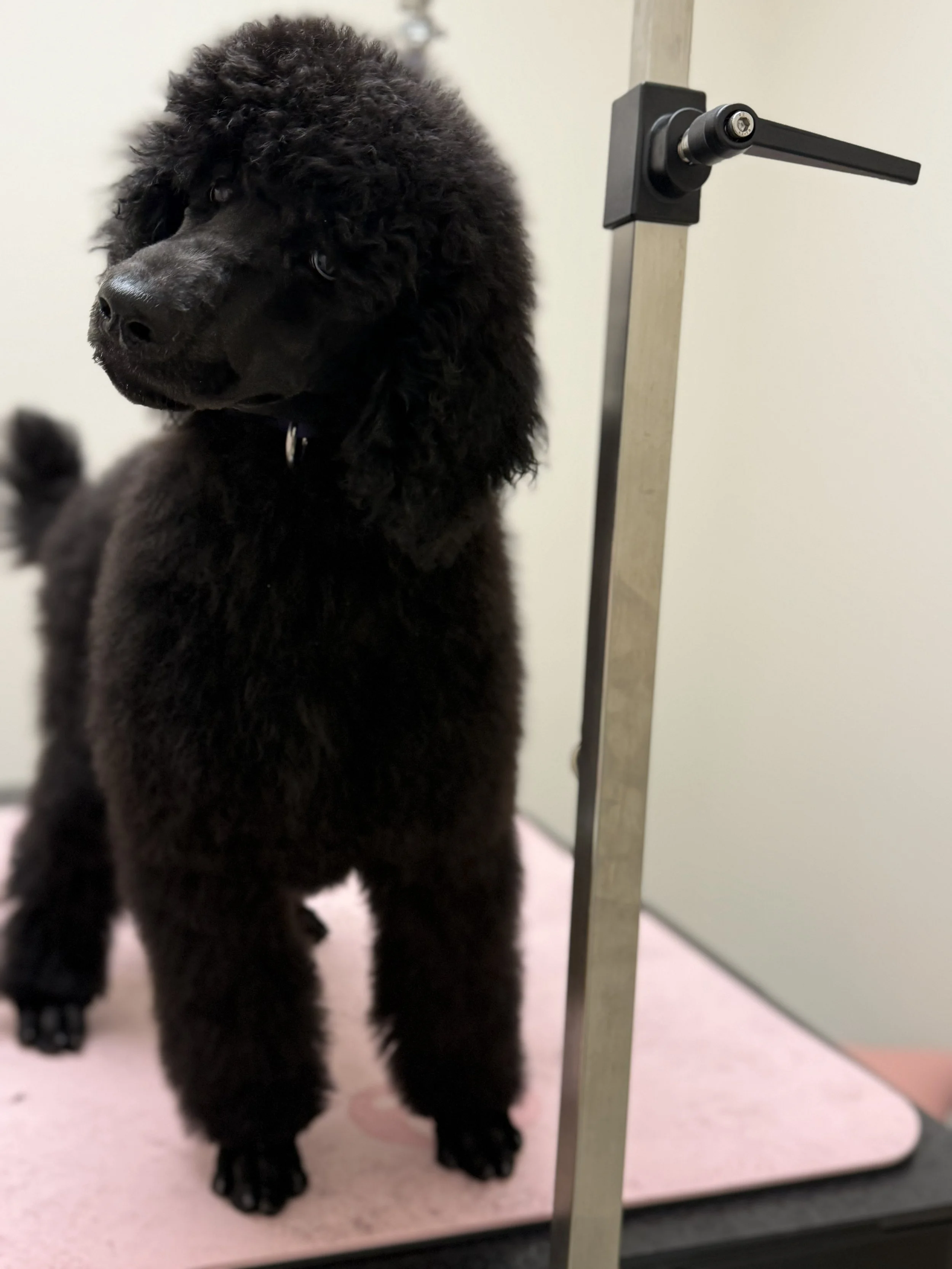
grooming success starts long before the first haircut
When people think about preparing a dog for grooming, they often focus on brushing, bathing, or scheduling puppy appointments. While those things certainly help, successful grooming is built on a collection of life skills that have very little to do with the haircut itself.
At artepupp pet grooming co., we believe grooming is a learned experience. Just like children learn how to sit for a haircut or visit the dentist, dogs benefit from learning the skills that make professional grooming feel safe, predictable, and comfortable.
here are five enrichment topics that can dramatically improve your dog's grooming experience.
*body handling tolerance
Groomers regularly need to touch areas that many dogs find sensitive, including feet, ears, tails, legs, and faces. Learning that gentle handling is safe and predictable helps dogs remain relaxed throughout the grooming process.
Practice may include:
Touching paws and toes
Briefly lifting legs
Handling ears
Gently touching the muzzle
Lightly touching the tail
why it matters
Many grooming challenges stem from discomfort with being touched rather than the grooming itself. Dogs who are comfortable with body handling are often more confident and cooperative during professional care.
*stationing: learning to stand still
Stationing is the ability to remain calmly in one location for a period of time. For grooming, this often means standing comfortably on a grooming table or remaining on a designated mat.
Practice may include:
Standing on a low platform
Remaining on a mat
Holding position during brushing
Staying relaxed while being handled
why it matters
Stationing develops body awareness, patience, and impulse control. These skills make grooming safer for both the dog and the groomer.
This is one of the foundations of what we call Table Confidence—helping dogs feel secure, comfortable, and successful while being groomed.
*sound + sensory desensitization
Many grooming tools produce sounds that can feel strange or intimidating to dogs. Introducing these noises gradually can help prevent fear and anxiety from developing.
Examples include:
Dryers
Clippers
Nail grinders
Running water
why it matters
Noise sensitivity is one of the most common causes of grooming-related stress. Dogs who learn that these sounds are harmless are often able to relax much more easily during their appointments.
*choice + control
Modern training approaches like cooperative care techniques recognize that dogs benefit from having a voice in their care. Allowing dogs to participate voluntarily helps build trust and confidence.
Examples include:
Stepping onto the grooming table independently
Offering a paw for handling
Choosing to approach grooming tools
Taking short breaks when appropriate
why it matters
Dogs that feel trapped are more likely to become fearful or resistant. Dogs that feel they have choices are often calmer, more engaged, and more willing participants in the grooming process.
*positive handling experiences
Like people, dogs develop emotional memories. Every interaction contributes to how they feel about future grooming appointments.
Positive handling experiences can include:
Short practice sessions at home
Rewards for calm behavior
Gentle, predictable handling
Ending sessions before the dog becomes overwhelmed
why it matters
Repeated positive experiences build trust over time. The goal isn't perfection—it's helping dogs feel increasingly comfortable and confident with routine care.
grooming is a skill dogs can learn
One of the biggest misconceptions about grooming is that dogs should simply tolerate it. In reality, most grooming success comes from teaching the underlying skills that allow dogs to feel safe and comfortable throughout the process.
Whether your dog is a young puppy, a newly adopted adult, or a senior learning new routines, it's never too late to build confidence around grooming.
When we focus on body handling, stationing, sound desensitization, choice, and positive experiences, we're not just preparing dogs for their next appointment—we're helping them develop lifelong comfort with the care they need.